
Bookkeeping Matters Before Tax Season
As tax season approaches, many small business owners find themselves scrambling — sorting through receipts, logging into bank accounts they haven’t reviewed in months, and hoping they didn’t miss anything important.
But here’s the truth: tax preparation doesn’t start in March or April. It starts with clean, consistent bookkeeping all year long.
If you want to maximize your tax deductions as a small business owner, the key isn’t last-minute organizing — it’s proactive financial management.
Let’s break it down.
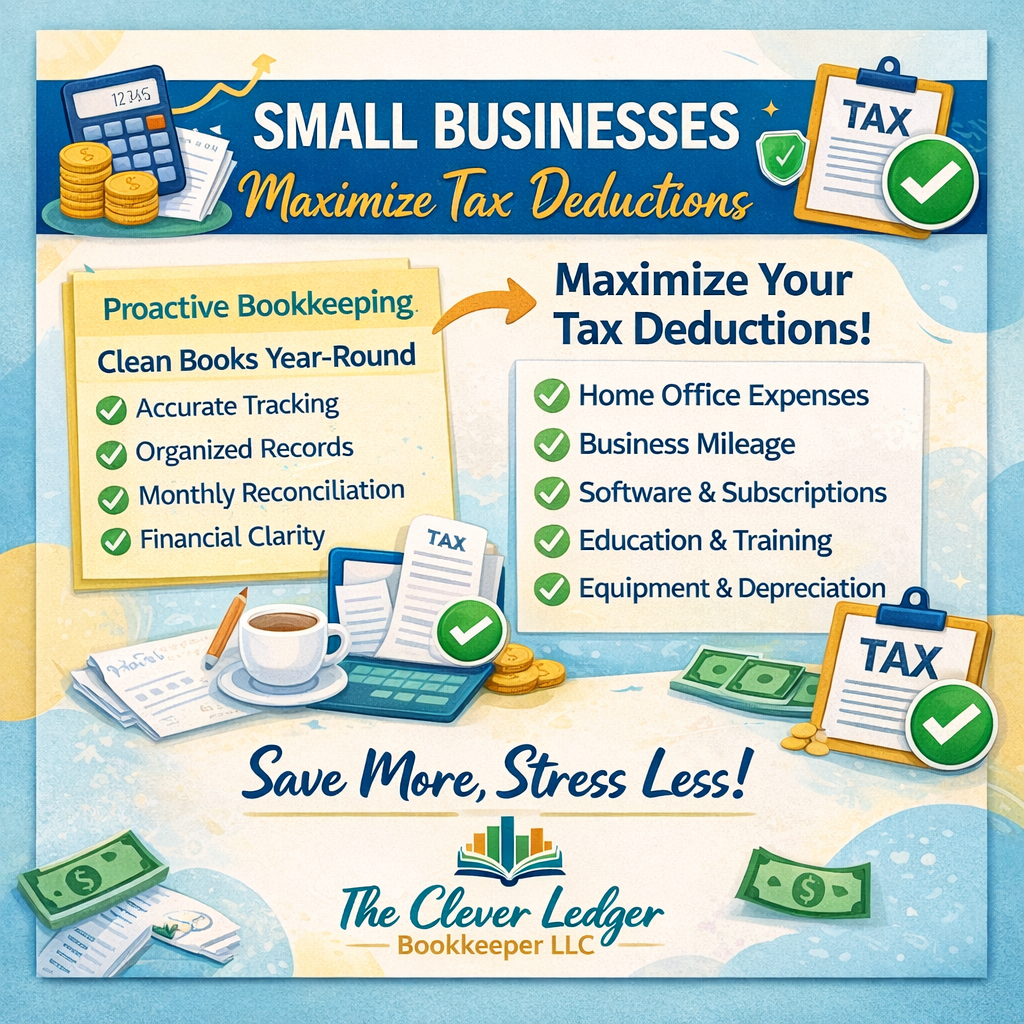
Why Accurate Bookkeeping Is the Foundation of Tax Savings
One of the biggest misconceptions in small business finance is that a CPA “finds” deductions at tax time.
In reality, your CPA can only work with what’s properly tracked.
When your books are:
- Up to date
- Categorized correctly
- Reconciled monthly
- Organized with supporting documentation
… you give your tax preparer the full picture — which means fewer missed deductions and fewer red flags.
A professional bookkeeper ensures that:
- Expenses are coded properly
- Business vs. personal spending is clearly separated
- Income is accurately reported
- Financial reports reflect your true profitability
That clarity directly impacts how much you legally save in taxes.
Common Small Business Tax Deductions That Get Missed
Without consistent bookkeeping, it’s easy to overlook deductible expenses such as:
- ✔ Home Office Expenses
- If you work from home, a portion of your utilities, internet, and rent/mortgage interest may be deductible.
- ✔ Business Mileage
- Driving to client meetings, networking events, or supply runs? That mileage adds up — but only if it’s tracked properly.
- ✔ Software & Subscriptions
- Accounting software, CRMs, project management tools, and industry memberships are often deductible.
- ✔ Education & Training
- Courses, certifications, conferences, and professional development can qualify as business expenses.
- ✔ Equipment & Depreciation
- Laptops, office furniture, cameras, tools — how they’re categorized can significantly impact your tax strategy.
When expenses aren’t consistently recorded throughout the year, these deductions can easily slip through the cracks.
How a Bookkeeper Helps You Save More on Taxes
A bookkeeper doesn’t replace your CPA — they strengthen your tax strategy.
Here’s how:
1. Clean Financial Reports Year-Round
Profit & Loss statements and Balance Sheets aren’t just for tax filing. They help you:
- Monitor cash flow
- Identify unnecessary spending
- Make strategic decisions before year-end
That means you can adjust before December 31 instead of reacting in April.
2. Fewer Errors, Fewer Audits
Inconsistent or inaccurate books increase the likelihood of reporting mistakes. Clean records reduce audit risk and help you confidently stand behind your numbers.
3. Proactive Tax Planning
When your books are current, your CPA can project tax liability before the year ends. That gives you time to:
- Make equipment purchases strategically
- Contribute to retirement accounts
- Adjust owner distributions
- Plan estimated payments accurately
Tax strategy works best when it’s proactive — not reactive.
4. Less Stress, More Focus
Instead of scrambling to “clean up” months of transactions, you walk into tax season organized and prepared.
And that peace of mind? It’s priceless.
Tax Season Is a Reflection of Your Systems
If tax season feels chaotic every year, it’s not because taxes are complicated.
It’s usually because the systems behind the numbers weren’t consistent.
Strong bookkeeping:
- Protects your time
- Protects your money
- Protects your growth
And most importantly — it gives you clarity.
Final Thoughts: Don’t Wait Until April
Maximizing tax deductions as a small business owner isn’t about aggressive strategies.
It’s about:
- Accurate tracking
- Organized records
- Clear financial visibility
- Strategic planning
When your books are clean, your tax professional can do their best work — and you can keep more of what you earn, legally and confidently.
If you’re heading into tax season feeling unsure about your numbers, now is the time to review your systems — not when the deadline is approaching.
Because the best tax savings start long before the return is filed.
We’d love to help, contact us today!